
Furniture Formed with History
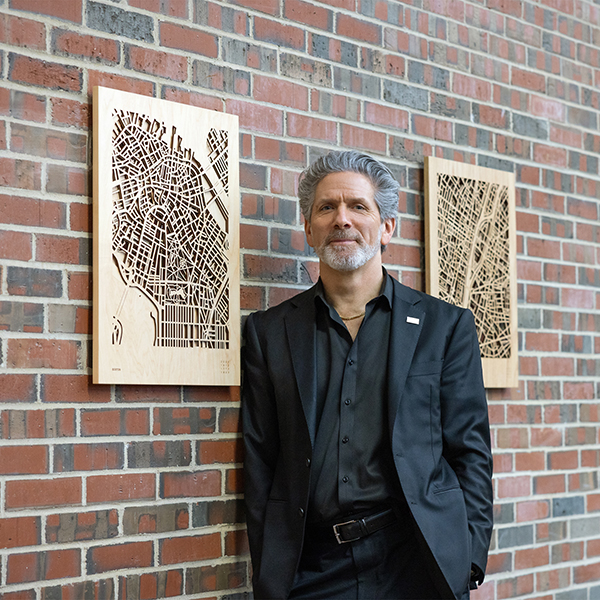
Cambridge-based architect Theodore “Ted” Galante had been in practice for thirty-some years designing municipal, commercial and institutional buildings throughout the eastern Massachusetts region, when, in 2016, a client—Harvard University—for which he had created a ceramics studio in Allston, MA, in 2014, asked him to design some chairs for Harvard Square. “I never did furniture,” Galante told me in a phone interview late last year. Yet a request by his prestigious client got him thinking about place making, an architectural term for going beyond function to convey a sense of social identity with a place. Could place making be applied to furniture?
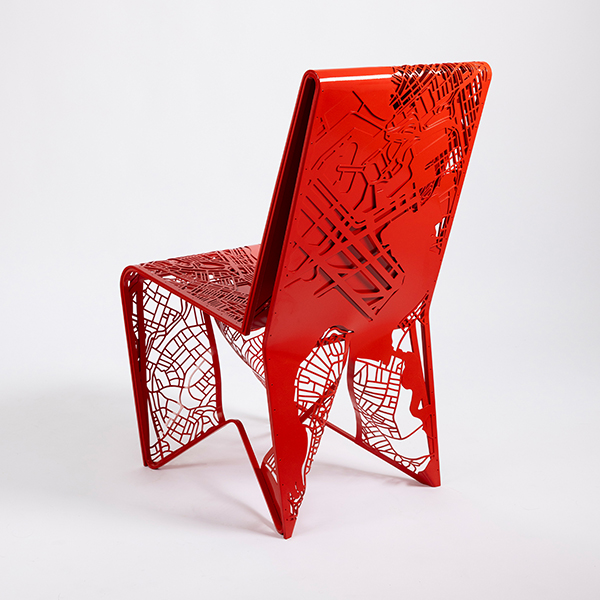
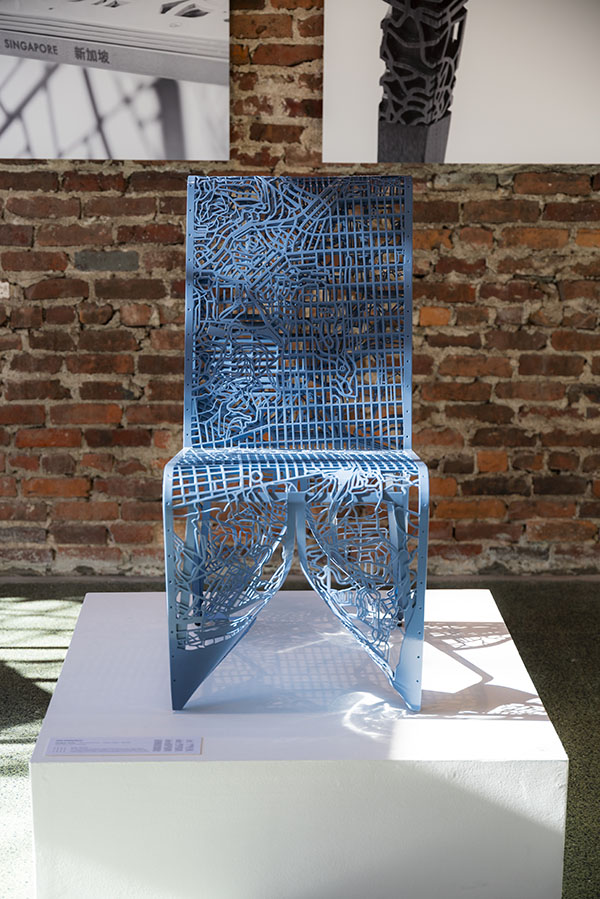
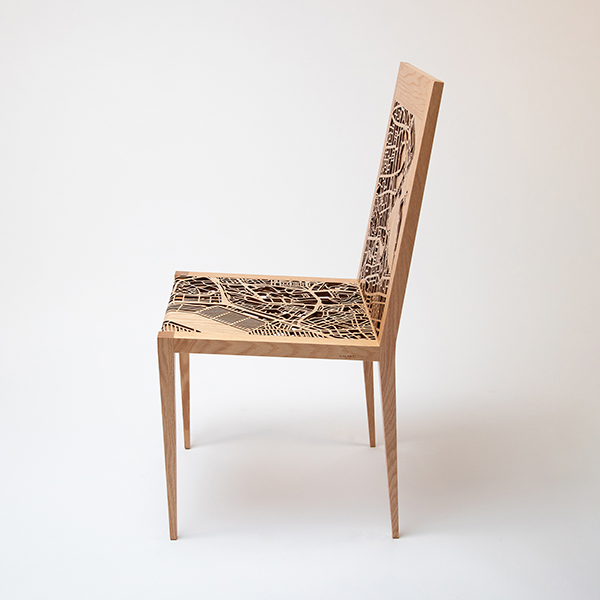
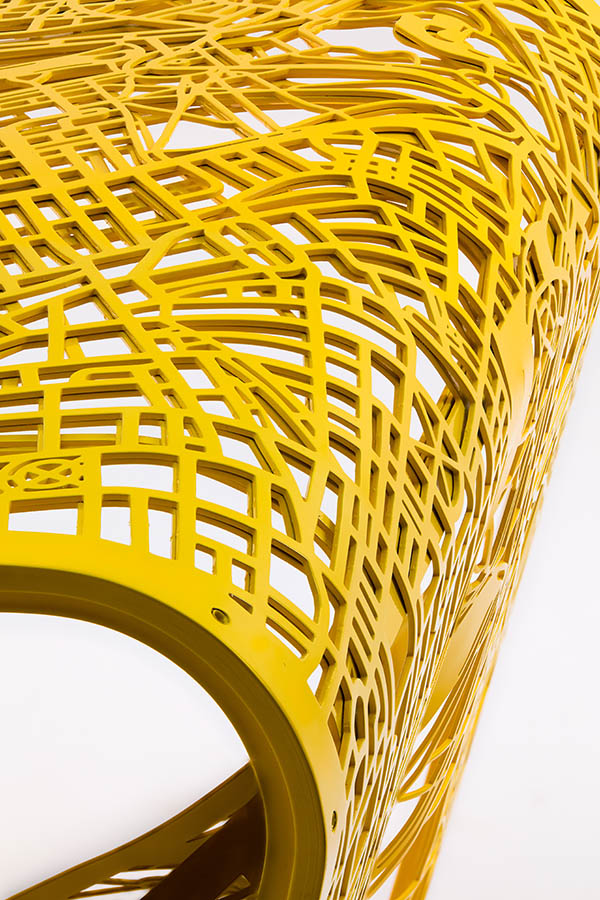
Aware that Harvard, established in 1636, was 140 years older than the United States, founded in 1776, Galante concluded that the time span “needed to be identified.” He did it by seeking out street maps of the Harvard area over different periods of its history and conceived of reproducing four of them, in either wood or aluminum, then stacking them chronologically to form the seat of a chair. He continued, using a process that combined traditional sketching, freehand carpentry, and hand-formed metalwork as well as highly-precise, computer-numerical-controlled (CNC) and laser cutting machinery, to produce intricate street map designs.
Galante grew up in a New York house that was focused on craft, making, drawing, and exploration, according to his firm’s website. He learned woodworking, metalworking, technical drafting, and drawing at an early age, which led to architecture studies in high school and college. His work was said to be a product of ongoing explorations into art, craft, design, and technology in ways that enfold lifelong experience with a passion to find what is new and relevant.
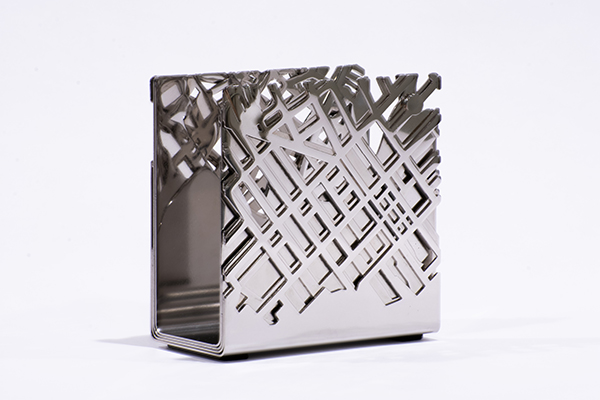
It was 2022 before the self-funded production process was refined enough for the chairs to be shown and marketed as the Galante Design Studio’s “Atlas Obscured Collection.” By then, archival maps had been developed for Boston, Cambridge, and other cities around the world. Chairs that his firm makes of oak, cherry or walnut are meant to be indoors. Aluminum chairs for use outdoors are powder-coated electronically and baked in a range of colors to be durable in all weather. The chairs debuted between October 2024 and February 2025 at a pop-up gallery in Harvard Square at prices of $4,000 for wood ($5,000 for custom) and $9,000 for aluminum ($10,000 for custom). The line has since been extended to wall maps priced at $900 for wood and $350 for acrylic as well as napkin holders called mapkins for $500 in stainless steel. The wall maps, napkin holders, and chairs share vivid, cut-out surface patterns of street networks that vary by location and resemble abstract art.
Initially, marketing was online and through furniture fairs, international exhibitions and competitions, as well as by interior designers and other influencers. More recently, it has broadened and intensified. “We are collaborating with local stores that are displaying some of our products (Blackstones in Boston and Wardmaps in Cambridge),” said Lizamie Bustillo, chief operating officer for Galante Design Studio. “And we have an active marketing outreach campaign going on now, reaching out to galleries and storefronts in New York, Massachusetts and throughout New England that display and/or sell similar items.”
“The design has a universal appeal,” she continued, “since we literally can produce chairs for any city, any place, and any time-period for which maps exist. Anyone who looks at the chair can imagine which city they would do and what time periods they would choose in order to narrate their unique story.”
So far, Galante shared, buyers have been “collectors wanting specialty items.” In comments for this story provided by Bustillo, buyer S. Beaucher said: “I find the chair engaging for not only the space and time it maps, but for its shape, elegance and, yes, comfort. Functional art at its finest is a thoughtful mix of the didactic, utility, and creative expression.” Buyer D.A. Jillson, added: “This collection represents time and place. For all who traverse the streets and alleys of the Square, now or in the past, it is a treasure. I value it and know it will be equally appreciated by my children, grand-children and generations to come. It is a legacy piece.”
-Charles Bonenti