
Gisela McDaniel: ININA
Ogunquit Museum of American Art, Ogunquit, ME • ogunquitmuseum.org • Through November 16, 2025
Gisela McDaniel’s interest in portraiture began at the University of Michigan where she earned a BFA in 2019. Because of experiences with sexual and domestic violence, McDaniel started making drawings of herself as a way of healing. She also began having conversations with other victims of gender-based assault about how they were caring for themselves. She joined the Detroit Art Babes, an intersectional feminist collective, and became a part of the art world. Over time, McDaniel’s drawings became paintings, including her first, a self-portrait with ski mask—a way to remain anonymous while celebrating selfhood. She has gone on to honor the lives of dozens of women by highlighting their beauty and power.
In her first solo museum show in the U.S., McDaniel shares fourteen portraits from 2021-2023. These complex paintings, some of them quite large, are layered and multi-media. In addition to generous oil paint dynamically applied, she attaches objects to the canvases and includes recordings of the subjects. The artist works closely with her sitters who can decide to be clothed or nude. “They have full control,” she explains, able to edit any aspect of their likeness, including the audio component. McDaniel wants to make sure these women have autonomy throughout the process and that they feel seen—and heard.
Many of McDaniel’s portraits reflect her Chamoru heritage. Although born and raised in this country, she considers her mother’s Guam her homeland. Gift giving—chenchule’—is an important part of its culture, which explains what the artist calls “consensual artifacts” incorporated in the paintings. The individual can choose the objects by which they want to be remembered, whether a grandmother’s t-shirt, shells, jewelry or other embellishments. She also uses soil as a ground in some paintings, “the DNA of the land.”
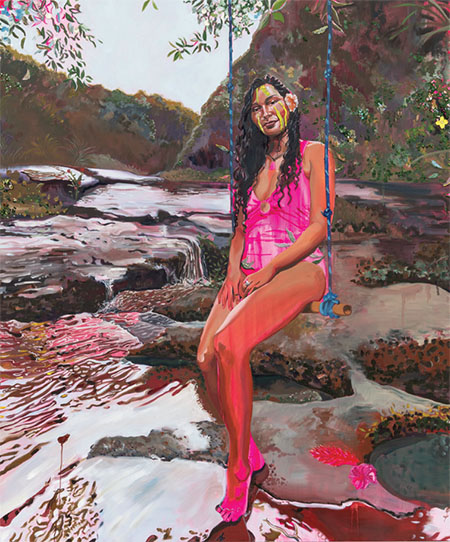
McDaniel portrays the women in outdoor and indoor settings. In Equanimity, a figure in pink camisole sits on a swing over a stream. Black-haired with a hibiscus blossom behind her ear, she looks directly at us, at ease in this peaceful place. Yellow stripes streak her composed visage, markings that recall warrior face paint even as they might represent the tracks of tears.
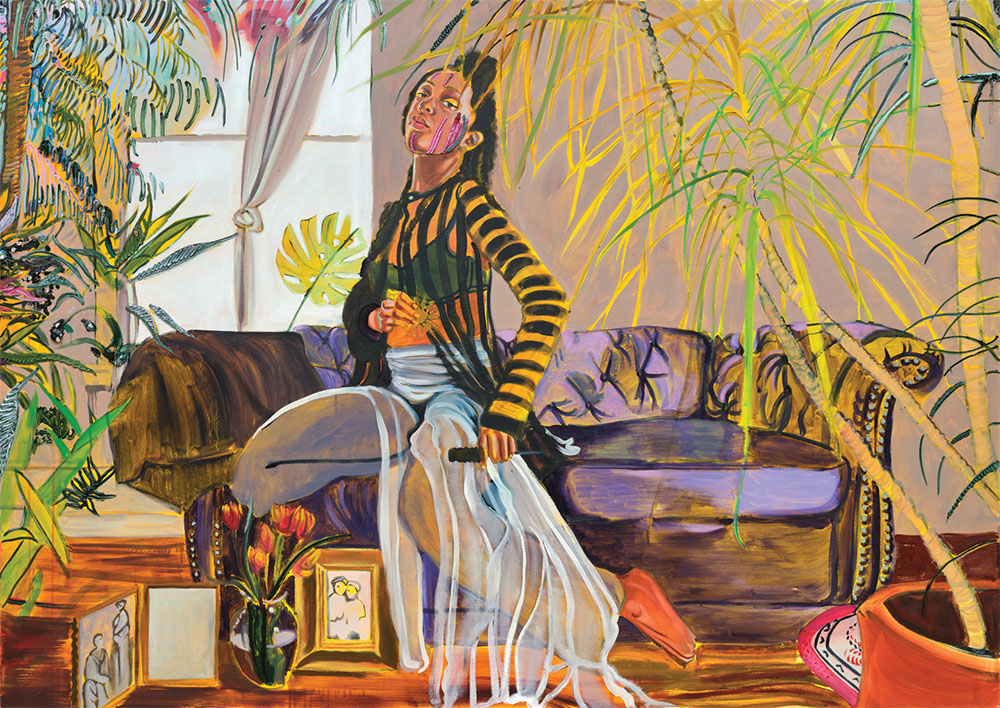
While a few of the figures display a compelling eroticism, others honor the domestic. The woman in Compassion sits on a couch in a room alive with houseplants. Dressed in a dark bra and transparent flowing skirt, she tilts her head upwards, the stripes on her face adding to her look of defiance. Family photos in the foreground add to the intimacy. They also appear in Båli Mesgnon, Patgon ni hayi and Nëna. In her portraits, McDaniel moves far beyond Matisse’s women-in-drawing-room paintings, adding humanity and empowerment. Indeed, in addition to relatives, her subjects include climate activists and healers.
In several paintings, including Båli Mesgnon, Inagofli’e and Put It Down for Her, the canvases cannot contain everything: objects spring beyond the frames. They add to the celebratory nature—and painterly exuberance—of the portraits. “Portraiture has been a part of our world history for a long time,” McDaniel told Devon Zimmerman, Ogunquit Museum curator, in an interview related to the show. An “elevated type of image,” she puts a lot of “love and care” into it. At the same time, she acknowledges the privilege of the artist to choose who will be remembered. The show’s title, “ININA,” is a Chamoru word for “glimmer of light.” McDaniel’s paintings offer more than glimmers: they are spotlights on women who have suffered and survived, who glow in their skins.
—Carl Little