
Steve Procter Ceramicist, Studio Visit
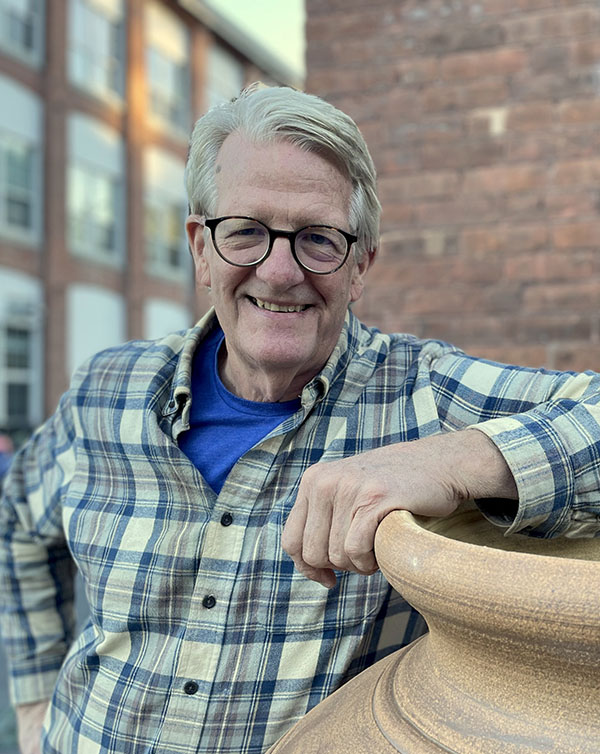
There is a thoughtful energy to ceramicist Stephen Procter that is one part nature, and one part nurture; the latter, one can imagine, influenced by his work as a large format ceramicist. Procter lives and works in Brattleboro, Vermont, where he maintains a studio in a historic repurposed textile mill. Over the last thirty years he has grown a devoted following for works of distinctive elegance, simplicity and monumental scale. He produces his work by wheel and hand, with the help of select apprentices, trained to collaborate on his visions, and also encouraged to nurture their own creativity. The studio space has an energized, industrial feel, and his office, tucked away in a small room, emanates warmth and restorative tranquility.
Procter’s entry into the world of clay came by the simple moment of watching someone working on the wheel. “I was mesmerized by the meditation bubble that happens when watching a lump of clay take on intelligence, and I was seduced by the tool, the clay, the sensual pleasure of the wet clay and the hand, and the challenge of creating form. The power and language of form is a high mystery. How is it that one curve evokes longing, a similar one inspires reverence, and yet a third one is mute and impotent?”
About his work as an artist, Procter notes, “My creative life has always been about striving to bridge the seen and unseen worlds. In my previous profession as a classical guitarist, it was the quest for the tone, arc, and underlying emotion that would take me and an audience to a timeless place. Now, as a ceramic artist, my elements are clay, volumes and curves, but the goal is the same; reaching for the eloquent gesture that lifts the veil for a moment.”
Procter’s transition from classical guitarist to ceramic artist was surprisingly seamless. “I found many parallels and analogies. Whether working in sound through time (music) or material through space (sculpture), it comes down to the quest for the living, expressive gesture. Early on, the decisions about form, the elements, it all felt analogized from music, music as gesture, the way a choral conductor would think of a shape in space, how a line has to have a sense of growth movement and destination.”
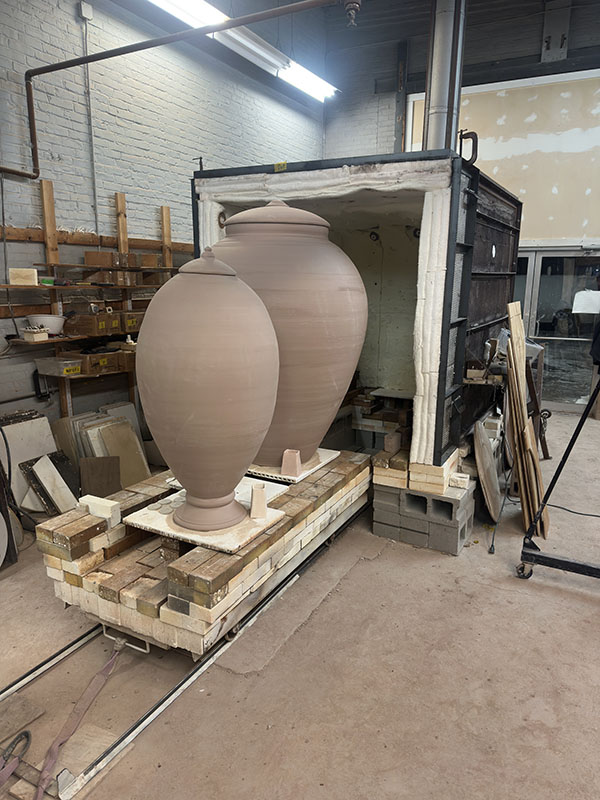
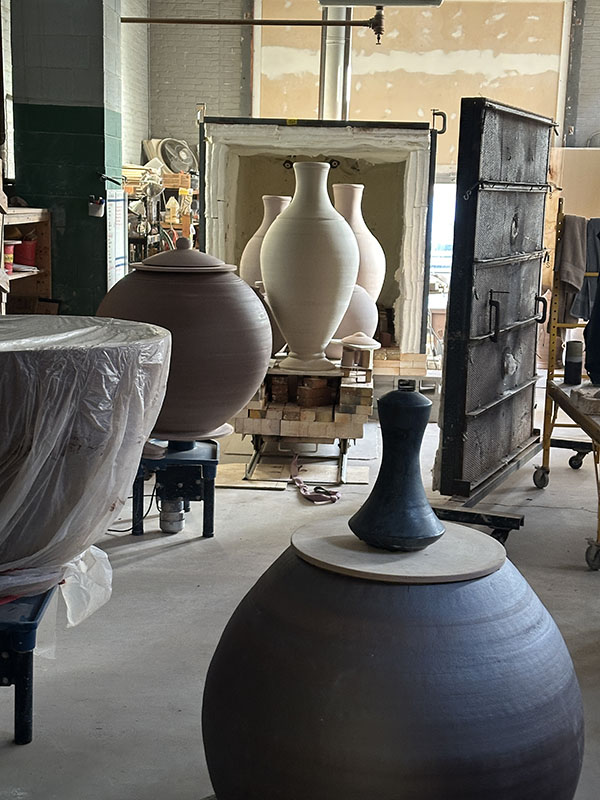
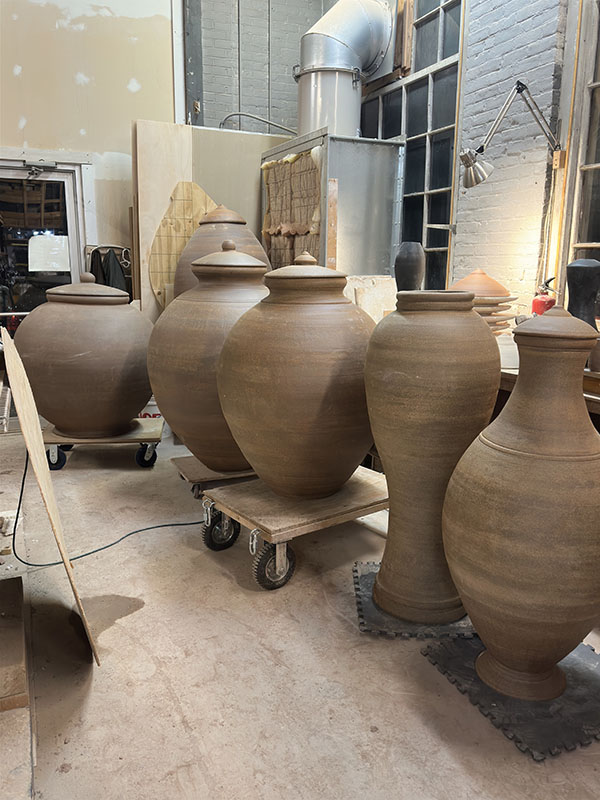
While the meditative process of working with clay brings a peace and quietude to the mind and soul, “working in large scale format, clay becomes a potent, whole body experience, with the intellect, the thinking and the feeling operating in tandem. The thinking is problem solving; the feeling is more like ‘ok, the radius of the curve.’ The calculation comes after the fact.” Is Procter patient by nature? He answers slowly, with a smile and a twinkle in his eyes, “Patience is different from persistence.”
Procter has said that he sees his artistic practice as an investigation, a quest into the mysteries of how and why we are moved by scale and shape. “The animate presence of good, large pots has always enchanted me. As physical objects, they impart gravity to the spaces they occupy. As beings, they invoke and emanate beneficent presence that momentarily disarms the psyche by the nature of their architectural scale. My works are invitations of companionship to anyone inclined to pause. I am fascinated by the way people interact with the works, talking to the works, hugging them; it is tender and precious.”
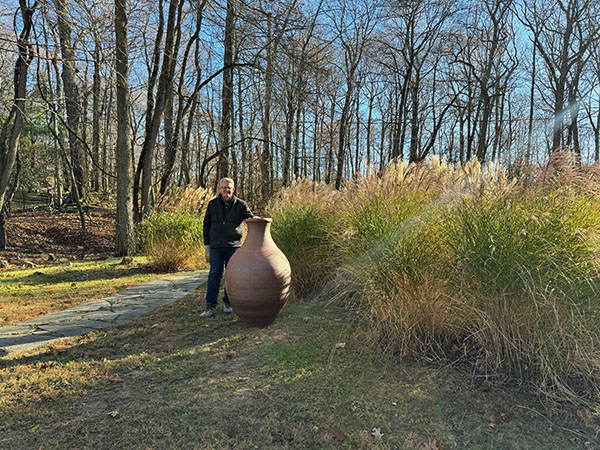
“In my thirties, I did some intensive studies in energy healing work. When I turned to clay, my curiosity was ‘how could energy, states of being, be embodied, communicated through form?’ Leonardo da Vinci described music as ‘shaping the invisible.’ In my previous profession as a classical guitarist I spun out the ‘shapes of the invisible’ in time and sound. Now, sitting at the potter’s wheel, I spin them out in space and clay.”
The emotional resonance in Procter’s work reflects his love for what he says he has been called to do. When asked why clay stuck in a way that music did not, Procter says, “I loved ensemble playing, and the interaction with other players, but I don’t have the mindset for solo work. My ceramic work harmonizes, it pulls spaces together and helps create order, and there is a high degree of collaboration especially creating large forms.”
Procter moves with a quiet intensity making his way through the studio engaging with an apprentice as she loads the kiln with equal parts grace and strength. He stops to open a window which lets the sound of a soothing rain waft into the studio, as afternoon shifts to evening light. “Gratitude, and being in the flow state,” he says slowly, weighing the significance of the statement. “This is important. Every day.”